ASCCP Management Guidelines
- 4.5
- Rating
- 10.00K
- Installs
- $14.99
- Price

 Analysis by App-foxy
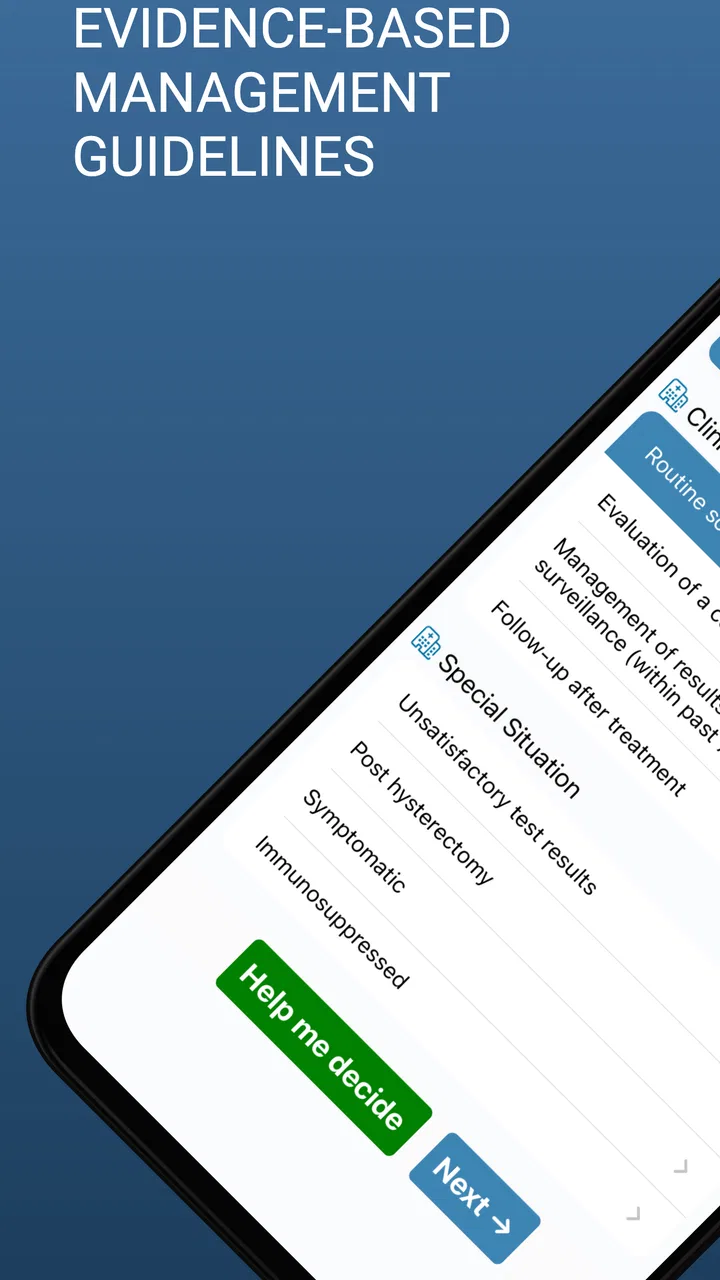
When a cervical screening result needs more than a quick glance, the difficult part is often not finding information but turning the information into a sensible next step. ASCCP Management Guidelines is built for that exact pressure point. Developed by ASCCP, this medical app puts the organization’s management guidance into a format that is easier to consult while working through cervical cancer screening and follow-up decisions.
I see it as a focused clinical reference rather than a general health app. It is not designed to educate a casual reader about cervical health from the beginning, and it does not try to replace a clinician’s judgment. Its value is narrower and more practical: helping a trained user navigate guideline-based management when several pieces of a patient’s history must be considered together.
The app costs $14.99, carries an Everyone age rating, and has reached over 10K installs. Its average rating is 4.5 from around 300 ratings, which suggests that many users find the reference useful, although the relatively specialized purpose means those figures should not be treated as a substitute for evaluating whether it fits your work.
You May Also Like

 AccuWeather: Weather Radar
AccuWeather Review: A Quick, Clear Forecast for Everyday Decisions
For everyday plans, the best forecast is the one you can understand quickly. AccuWeather makes rain timing, radar, and local conditions easy to act on, with a few trade-offs.

 Hill Climb Racing
Why Hill Climb Racing Still Turns Crashes Into One More Run
A tiny car, a bumpy hill and one more upgrade: Hill Climb Racing keeps resurfacing because its simple chaos makes every near-miss feel personal.

 AliExpress - Shopping App
AliExpress Makes Global Shopping Feel Personal, but Shoppers Bear the Risk
AliExpress turns a global marketplace into a pocket-sized discovery engine. Its reach is useful, its shopping loop compelling, and its trade-offs easy to miss.

 Lords Mobile: Kingdom Wars
Lords Mobile Is a Kingdom-Building Routine, Not a Quick Match
A case-by-case verdict on the building, battles, device demands, and social commitments that make Lords Mobile rewarding for some players and exhausting for others.

 PDF Scanner app - TapScanner
TapScanner Makes Paperwork Easier to Capture, Check, and Share
TapScanner makes scanning with a phone feel less like a rescue operation and more like a dependable step in getting work done. Its capture tools are useful, though not flawless.

 Block Blast!
 Shows How Much a Puzzle Game Can Leave Out
A quiet grid game shows why puzzle players increasingly value instant clarity, repeatable skill and low-pressure play—and where the genre still needs to catch up.
More From Our News Desk
View All News


Turning a complicated guideline into a usable clinical reference
The central capability is the presentation of ASCCP management guidelines in an app rather than as a large document or a collection of browser pages. That change sounds modest, but it affects how quickly I can move from a patient’s screening information to the relevant management pathway.
In everyday use, the benefit is not that the app makes a clinical decision for me. The benefit is that it gives the guideline a more practical place in my workflow. Instead of relying on memory for every combination of current result, previous history, and follow-up context, I can consult the reference and check whether my intended plan matches the recommended approach.
That distinction matters. A guideline app is most useful when it reduces uncertainty around a decision that still belongs to a qualified professional. It should support careful reasoning, not encourage someone to enter a result casually and accept an answer without checking the surrounding clinical facts.
For a medical reference, the app’s narrow focus is a strength. Many health applications mix patient education, symptom tracking, medication information, and appointment tools. This one stays centered on ASCCP management guidance. If your work involves cervical screening follow-up, that concentration is more useful than a broad medical app that offers only a shallow overview.
I also appreciate that the app is not presented as a general-purpose diagnostic tool. The store summary’s playful suggestion that there is an app for the guidelines describes the convenience, but the serious value comes from having a dedicated reference available at the moment a management question arises.
What the focused approach changes in practice
When I use a reference like this, I am not looking for a long explanation of every possible cervical screening topic. I am trying to confirm a pathway. The app’s focused design encourages me to gather the relevant information first, then consult the guidance with a specific question in mind.
That creates an important workflow habit: I can separate collecting the clinical facts from checking the recommendation. Before opening the app, I would want the current screening result, the relevant prior history, and any details that affect management ready in front of me. The app is most helpful after that preparation, not before it.
This is one of the less obvious strengths of a specialized guideline reference. It can make a rushed consultation more disciplined. Rather than searching the web with a vague phrase and opening several sources, I can approach the guideline with a defined clinical problem. The result is less about speed alone and more about reducing the chance that I overlook the importance of prior results.
At the same time, this workflow reveals the app’s limits. It cannot compensate for incomplete records or an unclear screening history. If the information going in is incomplete, the confidence of the final plan should remain limited, even if the reference is easy to consult.
A realistic screening follow-up scenario
Imagine a clinician reviewing a patient’s new cervical screening result during a busy clinic session. The current report is available, but the patient also has a previous screening history that changes how the result should be managed. The clinician remembers the general principles but is not fully certain which pathway applies.
With this app available, the clinician can pause before making the recommendation, review the relevant ASCCP guidance, and compare the patient’s situation with the management route. That short consultation may help distinguish between follow-up, surveillance, or a more immediate step, depending on the clinical details.
The important point is that the app supports the conversation rather than replacing it. The clinician still needs to explain the recommendation, consider the patient’s circumstances, document the reasoning, and use professional judgment. The app’s role is to make the guideline easier to reach at the right moment.
For a trainee, the same scenario can become a learning exercise. Instead of memorizing isolated rules, the trainee can observe how current findings and previous history work together in a management framework. Used this way, the app is not merely a lookup tool; it can reinforce a more structured way of thinking about screening follow-up.
How I would use it without slowing down the appointment
I would avoid opening the app with no clear question. First, I would review the report and the patient’s available history, then identify exactly what needs confirmation. This makes the consultation more efficient and helps prevent the app from becoming a substitute for reading the original laboratory or pathology information.
I would also use it as a second-check tool when a case feels familiar but not completely straightforward. Familiarity can be misleading in guideline work because a small change in prior history may alter the recommended route. Checking the reference at that point is more valuable than relying on a remembered shortcut.
Another practical habit would be to keep the patient-facing explanation separate from the guideline lookup. The app is aimed at management guidance, while patients usually need plain language about what the result means, why follow-up is recommended, and what happens next. I would consult the app first, then explain the plan in words suited to the patient rather than showing the reference as if it were a diagnosis.
That approach also answers a common concern about whether a patient can use the app independently. A patient may find it difficult to interpret the guidance without clinical training and complete history. I would not recommend using it as a self-diagnosis tool. Its best audience is a professional or learner who understands that the guidance must be applied in context.
Where it fits beside ordinary alternatives
The usual alternative is searching the web for the relevant guideline, opening a document, or relying on a printed reference. Those options can work, but they often introduce friction at the exact moment a decision needs checking. A web search may produce outdated pages, secondary explanations, or several versions of a recommendation. A printed document can be authoritative but less convenient to navigate during a consultation.
A dedicated app has a different advantage: it gives the guideline a permanent place in a clinician’s reference toolkit. That is especially useful for users who consult the material repeatedly and prefer a focused resource over general search results.
However, I would not call the app automatically better than every alternative. A current institutional reference system may fit a larger clinical workflow more naturally, particularly where documentation, local protocols, and team review are already integrated. A printed or official document may also be preferable when a user needs a broad, citable reference rather than a quick mobile consultation.
The app makes the most sense when convenience and focus matter. It is less compelling for someone who only occasionally encounters cervical screening management questions or who already has a trusted, current reference built into daily practice.
Tradeoffs that matter before buying
The $14.99 price is reasonable for a professional reference if it becomes part of regular work, but it is harder to justify for casual curiosity. A student may benefit from it during focused study, while a general user looking for personal health information would probably gain more from a patient-friendly educational source and a conversation with a clinician.
The app’s specialization is another tradeoff. Because it concentrates on ASCCP management guidance, it is not a complete cervical health library. I would still need other resources for broader screening education, pathology interpretation, patient communication, local procedures, and clinical questions outside the guideline’s scope.
There is also a risk common to every compact medical reference: convenience can encourage overconfidence. A short consultation may feel definitive even when the case contains missing history, unusual circumstances, or factors that require specialist input. The app is valuable precisely when it is used as a support for reasoning, not as an automatic answer machine.
Version 2.4.3 is the current version listed for the app, and it supports devices running Android 5.0 or later. That broad minimum requirement makes it accessible on older Android hardware, although users should still consider whether their device offers a comfortable screen and responsive performance for reading clinical material. A small display can make any detailed medical reference less pleasant to use, especially during a busy consultation.
The age rating of Everyone should not be confused with the intended level of expertise. The rating describes general content suitability, while the subject itself remains professional and clinically sensitive. A teenager could technically encounter the app in an app catalog, but that does not make it an appropriate independent guide for interpreting a personal screening result.
Three ways to get more value from the reference
First, I would treat the patient’s previous screening history as essential working material rather than an optional extra. The most useful consultation is not simply “What does this current result mean?” but “How does this result fit with what happened before?” That mindset helps prevent the common mistake of reading the newest result in isolation.
Second, I would use the app before finalizing the plan, not only after a question has already become a problem. A quick check during case preparation can reveal that a seemingly routine result deserves a different follow-up conversation. This is a more thoughtful use than opening the app only when a patient is waiting for an answer.
Third, I would pair the guideline consultation with clear documentation. After checking the relevant pathway, recording the clinical information considered and the reason for the chosen management can make the decision easier to explain later. The app may help with the reference step, but the quality of the overall workflow still depends on what the clinician records and communicates.
A fourth useful approach is to use it for teaching without turning it into a memorization contest. A learner can compare two cases that have similar current results but different histories, then discuss why the management route may differ. That exercise highlights the practical lesson that guideline decisions are often contextual rather than based on one isolated label.
Who benefits most from this app
I would recommend it most strongly to clinicians, trainees, and other healthcare professionals who regularly deal with cervical screening results or follow-up planning. For these users, a focused reference can earn its place by reducing the need to search through broader material every time an unfamiliar combination appears.
It may also suit a learner who wants a practical companion while studying ASCCP management guidance. The value for a student depends on how actively the app is used. Reading it passively will not replace instruction, but applying it to supervised examples can make the structure of the guidance easier to understand.
For a primary care professional who encounters screening questions occasionally, the decision is more balanced. The app may be worthwhile if those consultations are frequent enough to justify a dedicated reference. If such cases are rare, an official institutional resource or consultation with a specialist may be a better fit.
I would advise patients and family members to skip it as a self-guided interpretation tool. Even though the content rating is Everyone, the app is not a substitute for a clinician who can review the full screening history, explain uncertainty, and arrange appropriate care. Its language and purpose are better suited to professional use.
My overall assessment
ASCCP Management Guidelines succeeds because it focuses on one meaningful problem: making specialized cervical screening management guidance easier to consult when a real decision is being made. In my experience, that kind of narrow usefulness can be more valuable than a larger app that tries to cover every medical topic.
I like the way it encourages a careful workflow: gather the current result and prior history, identify the question, check the guidance, and then apply professional judgment. That process is the app’s real contribution. It does not make complex cases simple, but it can make the reference step less cumbersome and less dependent on memory.
The limitations are equally clear. It is not a general health educator, not a replacement for clinical training, and not a complete substitute for official documents or local protocols. The purchase only makes sense if the guideline is relevant to your work or study often enough to justify a dedicated tool.
My recommendation is straightforward: healthcare professionals and supervised learners who regularly handle cervical screening follow-up should consider it a useful pocket reference, while casual users and patients should choose a clinician-led source instead. If you understand that distinction, the app’s focused design becomes its biggest advantage rather than a restriction.
FAQs for ASCCP Management Guidelines
01What is the ASCCP Management Guidelines app used for?
The ASCCP Management Guidelines app is designed to help healthcare professionals apply evidence-based recommendations for managing abnormal cervical cancer screening results. It provides access to risk-based guidance, suggested follow-up actions, and clinical management information. The app is intended as a point-of-care reference and should be used alongside a patient’s complete medical history, current test results, and professional clinical judgment.
02Who should use the ASCCP Management Guidelines app?
This app is primarily intended for clinicians and other qualified healthcare professionals involved in cervical cancer screening, colposcopy, diagnosis, or follow-up care. It may be useful for gynecologists, primary care providers, nurses, and trainees who need a quick reference while reviewing screening results. Patients can read the information for general understanding, but the recommendations should not be interpreted as personal medical advice.
03Does the app provide personalized treatment recommendations?
The app can help users interpret cervical screening and pathology information according to ASCCP risk-based management guidance, but it does not replace an individualized consultation. Recommendations may depend on factors such as age, pregnancy status, previous screening history, biopsy results, and other clinical details. A qualified healthcare professional must confirm the appropriate management plan for each patient.
04Can the ASCCP Management Guidelines app be used without an internet connection?
Offline availability may depend on the version of the app, the device, and whether the relevant guideline content has already been downloaded or cached. Some features may require an internet connection for updates, account functions, or newly published recommendations. Before relying on the app in a clinic or remote setting, users should open it in advance and verify which tools and reference materials remain accessible offline.
05Is the information in the app a substitute for official guidelines or medical advice?
No. The app is a convenient clinical reference, but it should not be treated as a substitute for official ASCCP publications, local protocols, specialist consultation, or professional judgment. Medical recommendations can change as new evidence becomes available, and individual cases may involve circumstances not fully represented by an app tool. Always check for updates and follow applicable institutional and national guidance.
Pros
- Clear
- evidence-based guidance for managing abnormal cervical screening results.
- Helps clinicians select follow-up based on current and prior patient history.
- Supports personalized risk assessment instead of rigid result-based treatment.
- Useful for documenting management decisions and patient counseling.
- Regular updates help reflect changes in cervical cancer screening practices.
Cons
- Designed mainly for healthcare professionals
- not general patients.
- Requires accurate prior screening and biopsy history for reliable recommendations.
- Guideline navigation can feel complex for uncommon clinical scenarios.
- Some features or resources may require internet access or account support.
- Recommendations may vary by region and local screening protocols.

ASCCP Management Guidelines
Gallery